Switchboard upgrades, done once and done properly
The board is the one part of a house that protects everything else in it. If yours still has ceramic fuses, it was built for a household that didn't own a dishwasher, let alone a car that charges overnight. We replace it with an RCBO on every circuit, label every way, leave spare capacity for whatever you add next, and hand you the certificate.
Get the board quoted
A photo of the open board gets you a far more accurate number. Send one if you can.
No call centre. Goes straight to us.
Heat marks, discolouration or a smell around the board?
That's not a job to put on the list for autumn. Switch off what you safely can and ring us.
What an upgrade actually looks like
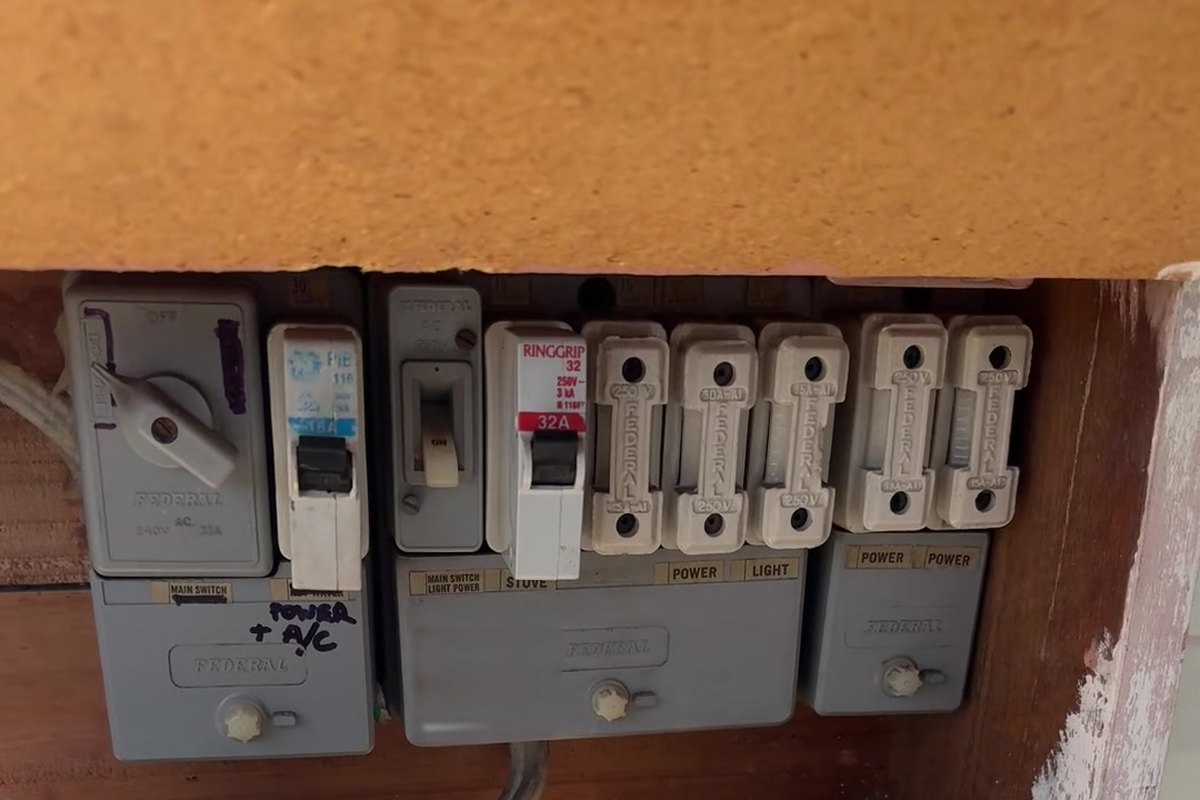
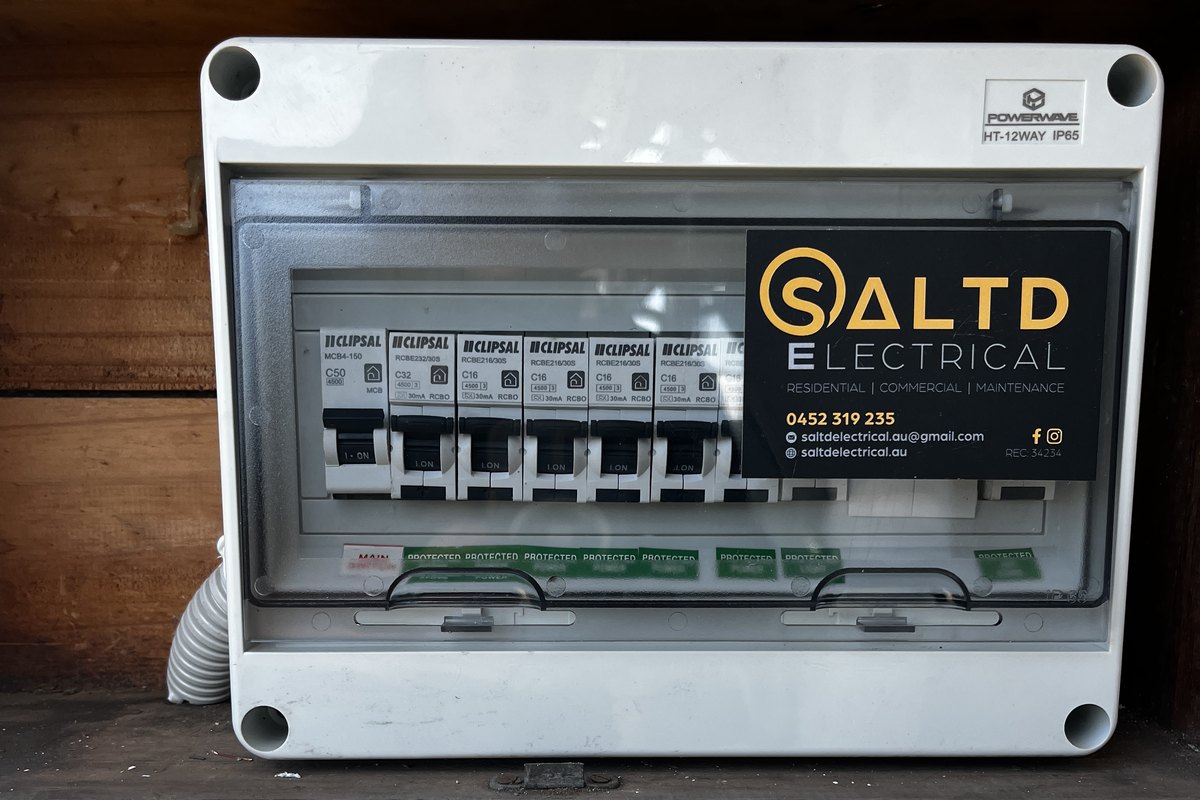
This is a real job in a local home, before and after. The left-hand photo is what "ceramic fuses" means in practice: rewireable fuse carriers, no safety switch anywhere in the board, and no shock protection in the house at all.
Signs yours is due
- Ceramic rewireable fuses, or fuse wire in a drawer somewhere
- No safety switch (RCD) on power and light circuits
- No spare ways left, so nothing new can be added
- Discolouration, heat marks or a smell around the board
- Circuits that trip under normal household load
- One fault takes out half the house, or the lot
- Nothing's labelled, so nobody knows what feeds what
- You're adding an EV charger, aircon, a battery or a reno
What you get
- An RCBO per circuit — one fault takes out one circuit, not half the house
- Compliant main switch and correctly rated protection throughout
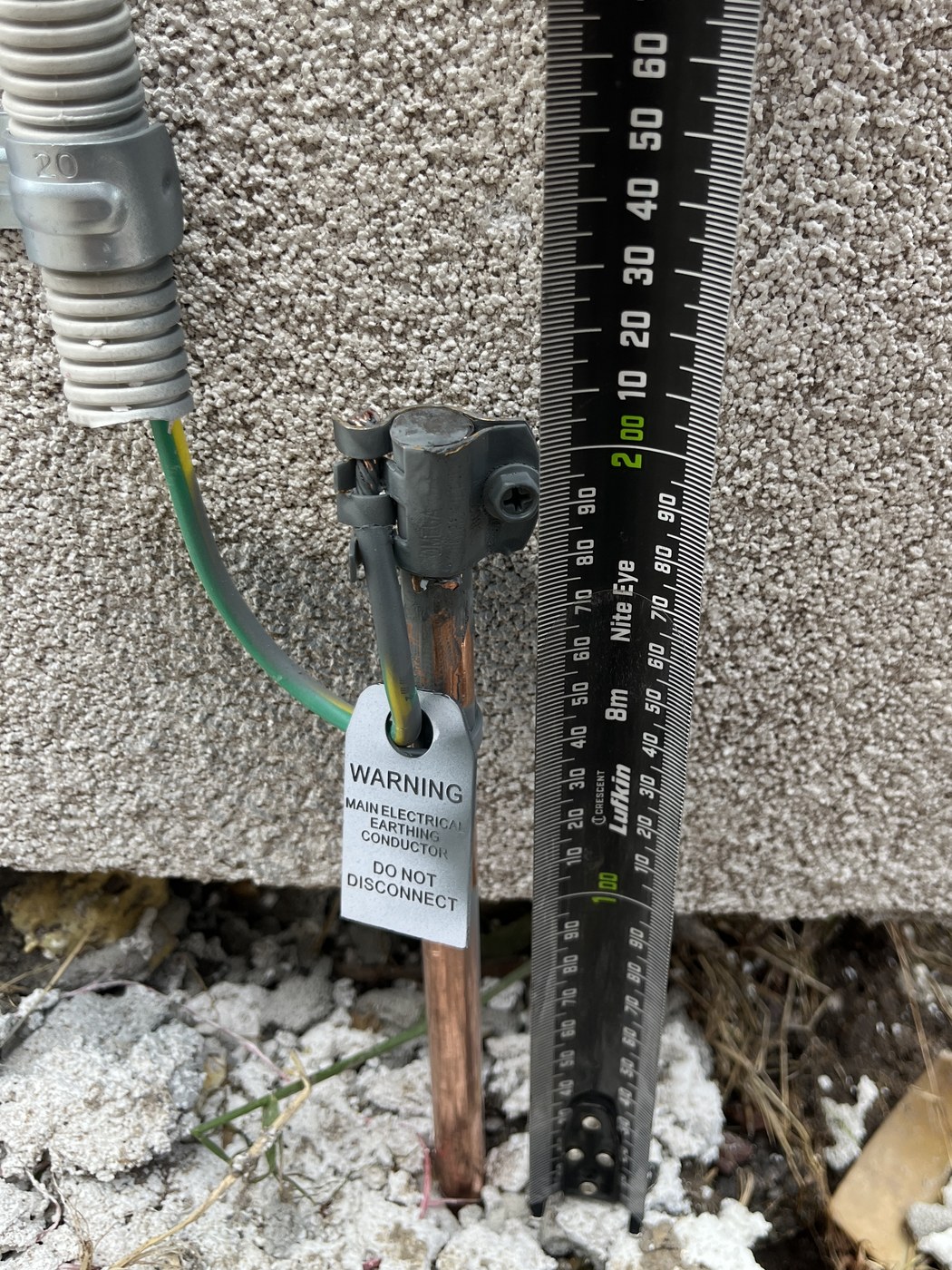
- Earthing tested, main earth included — and you hear about it before the day if it needs replacing
- Everything labelled — so the next person can read it
- Spare capacity deliberately left for what you add next
- Tested and certified, with prescribed work independently inspected
One RCBO per circuit, not one safety switch for everything
This is the part most quotes don't explain, and it's the difference between a board that's merely newer and a board that's actually better to live with.
- One shared RCD for the house was normal practice through the late eighties and nineties. Every power circuit sits behind one device, so any one of them can drop all of them — fridge, freezer, internet and lights together.
- Standing leakage stacks up behind a shared device. Every phone charger and LED driver leaks a tiny amount by design, so the board gets twitchier year after year with nothing actually broken.
- Diagnosis is slower and dearer on a shared board, because the fault could be anywhere behind that one switch rather than on one identified circuit.
- Lighting was often left unprotected on those boards — which is the circuit you're most likely to be touching when you change a fitting.
- An RCBO per circuit fixes all four. One fault, one circuit, immediately obvious which one, and the rest of the house stays on.
The day itself
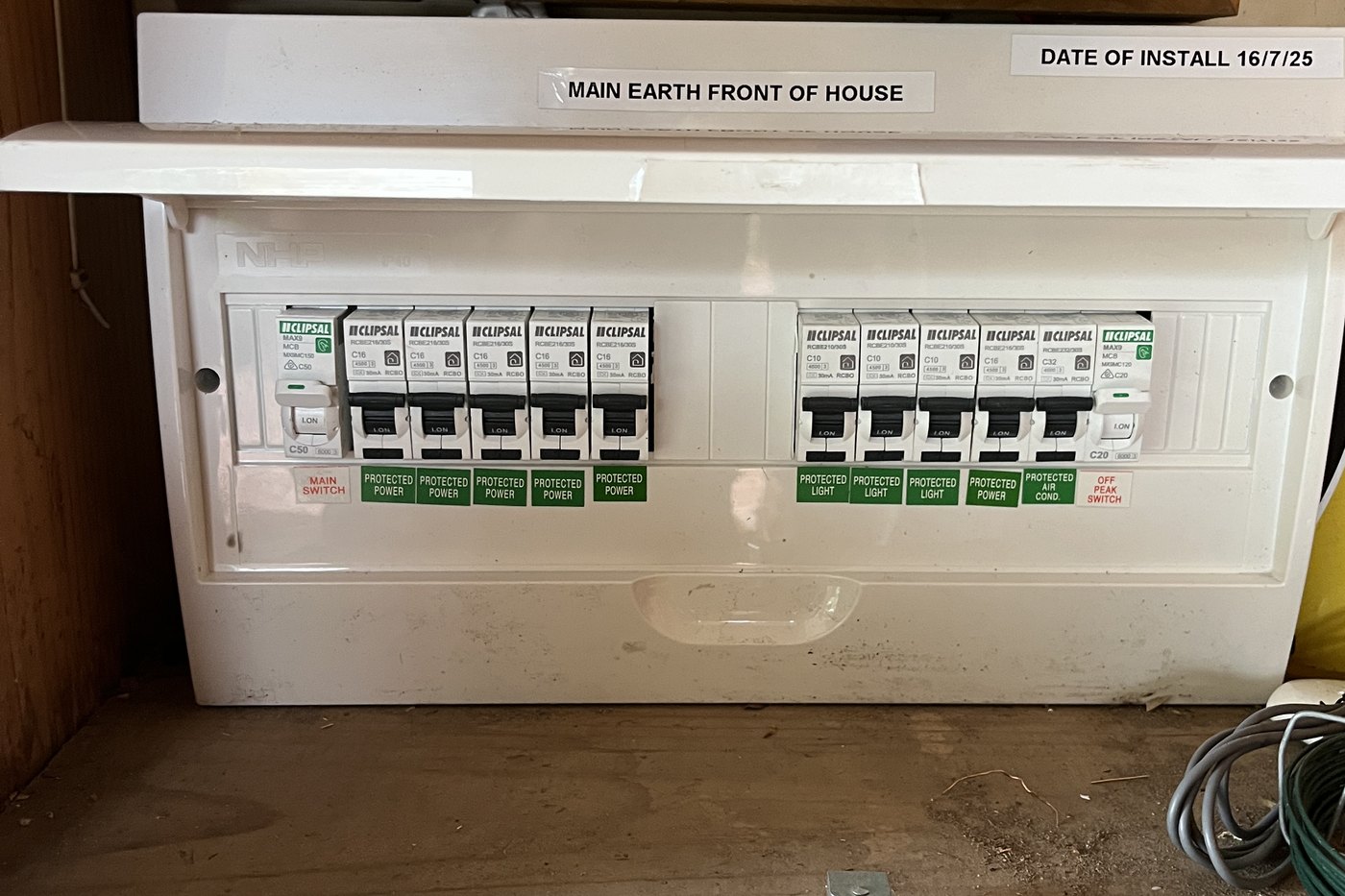
A standard domestic board is a day's work. The power is off for a good part of it, and you'll know the likely window before the day rather than on it.
1. We look at it first
Cover off, circuits counted and identified, earthing checked, mains and meter panel assessed. That's what turns a phone estimate into a fixed price.
2. Fixed price, in writing
Scope and number before anything is booked. If the mains or the meter panel need work too, that's priced then and not discovered halfway through the day.
3. Supply and paperwork arranged
If the job needs the distributor or a metering provider, that's lodged and booked in advance. Those visits are the only part of the timeline that isn't ours to control.
4. Changeover day
Old board out, new enclosure in, every circuit terminated, identified and labelled. Work from the fridge in the morning if you need to — we'll tell you when it's going off.
5. Tested, then inspected
Full test results recorded, then an independent licensed inspector signs off the prescribed work. That's a requirement, not an upsell.
6. Certificate and a tidy site
Certificate of Electrical Safety in your hand, rubbish gone, and a board your next electrician can actually read. Keep the certificate for your insurer.
Planning an EV charger or a battery retrofit as well? Do the board once and do it for all of them — it's meaningfully cheaper than three separate visits. Worth reading first: whether an EV charger actually needs a switchboard upgrade, because often it doesn't.
Consumer mains & three-phase upgrades
The consumer mains are the cables running from the street connection to your switchboard. Every circuit in the house sits downstream of them — and in plenty of homes around here they were sized for a household that cooked on gas and owned one television. A new board on undersized mains fixes the protection and not the capacity.
Signs yours are undersized
- Lights dip or flicker when the aircon, oven or kettle kicks in
- Overhead mains that are brittle, sagging or bare twisted conductor
- A meter box and point of attachment nobody has touched in decades
- Solar that trips out or throttles back on bright days — often voltage rise on a long, thin supply
- You've been told the board can't take an EV charger — frequently it's the mains, not the board
- You're adding a charger, a battery, ducted aircon or an induction cooktop
What the job involves
- Maximum demand calculated to AS/NZS 3000, not guessed off the last job
- Mains sized for what's next — charger, battery and aircon included, not just today's load
- Point of attachment, meter box or pillar reworked where the supply comes in
- Distributor application lodged for you — AusNet or United Energy, whichever covers your street
- We're on site when their crew attend, so the changeover happens in one visit rather than three
- Tested and certified, with prescribed work independently inspected
Going from single phase to three phase
Most homes are fed by a single phase. Three phase brings three in, so the property can carry roughly three times the load and heavy items can be spread across the phases instead of stacked on one. It's the upgrade behind 11 kW and 22 kW EV charging, larger battery and inverter systems, ducted air conditioning, workshop and shed machinery, and all-electric conversions where the cooktop, the hot water and the heating all land at once.
It's a bigger job than a switchboard swap. It needs new mains, a new point of attachment or pit connection, a three-phase main switch and board rework, an application to the distributor, and a three-phase meter fitted by your retailer's metering provider. We handle the electrical work and the paperwork, and coordinate the two visits that aren't ours so they don't turn into three.
Before you spend the money: most EVs sold in Australia cap their onboard charger near 7.4 kW. Three phase won't make those cars charge faster. We'll tell you when it won't help.
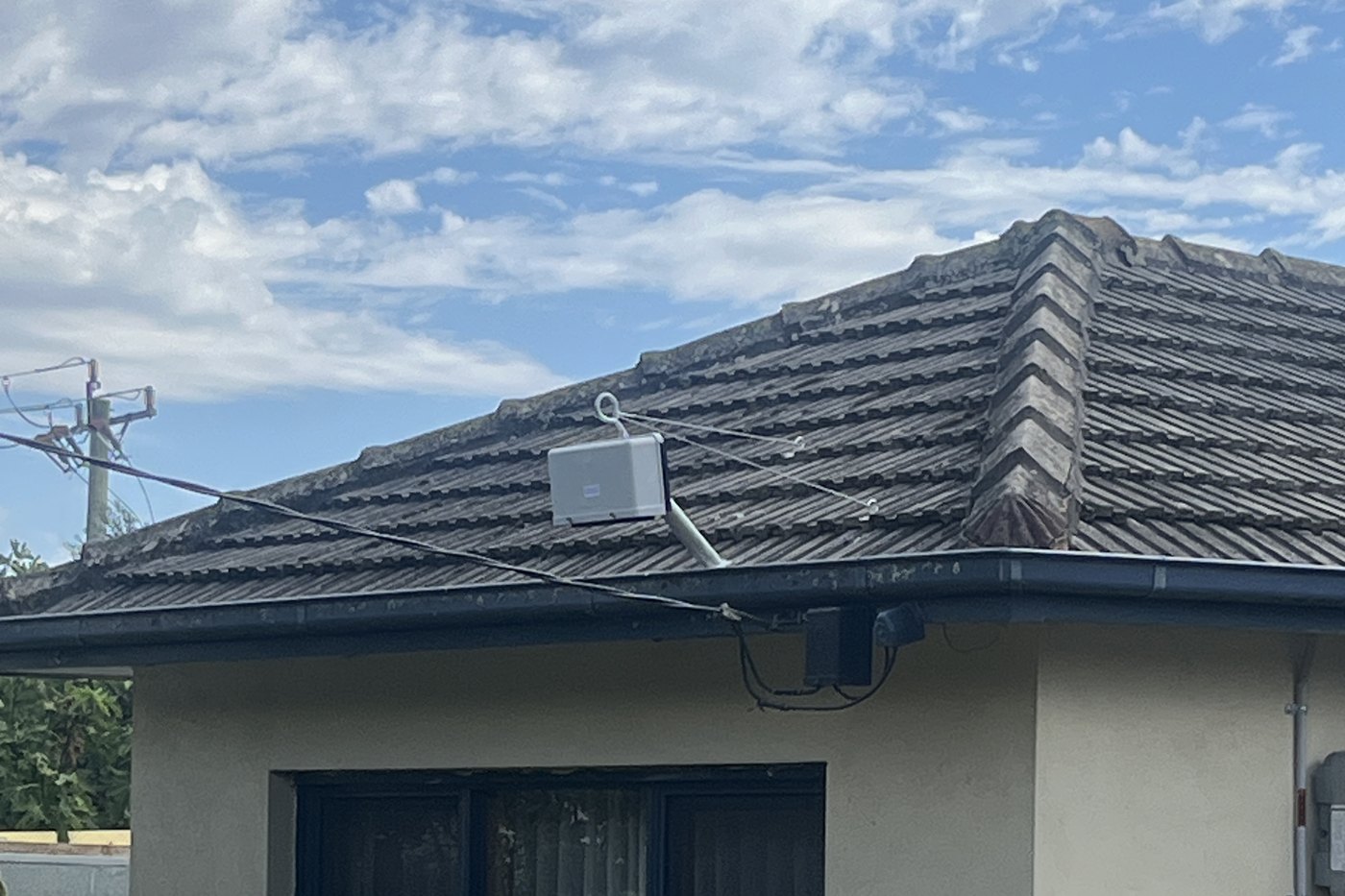
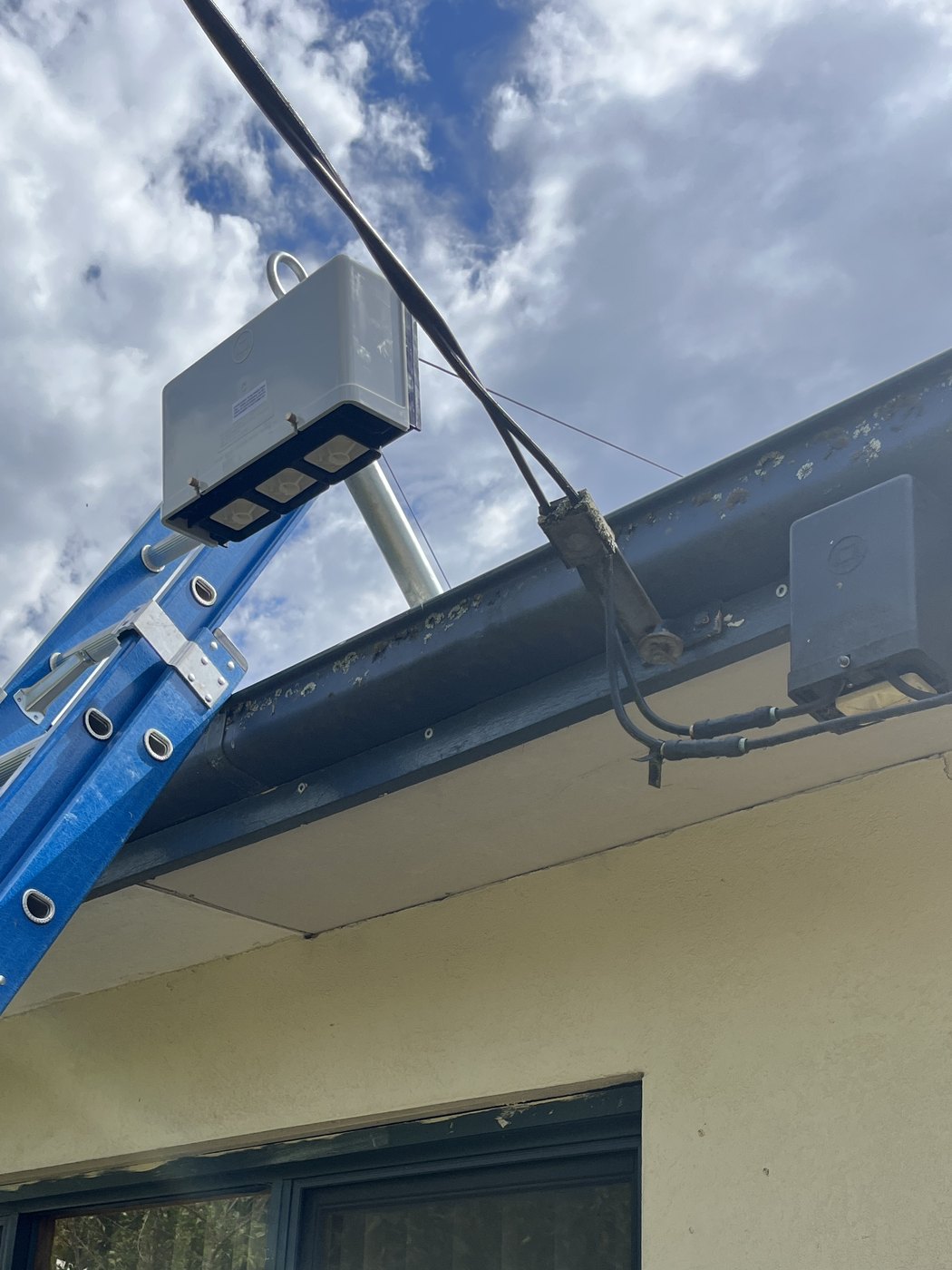
Most people meet this problem the wrong way round — they book an EV charger or a battery retrofit and find out on the day that the supply won't carry it. We check the mains and the board before quoting, so the number you're given covers the whole job.
What moves the price
Two boards that look identical from the outside can be a long way apart on price, and it's almost always one of these six things rather than the brand of the breakers.
Full upgrades start at $1,200 inc GST, inspection and certificate included, and most domestic boards land between $1,200 and $2,200. Rough figures off jobs we've done, not a quote — the fixed price comes once we've seen the board.
How many circuits
Every circuit gets its own RCBO, so the count drives both the hardware and the labour. A three-bedroom house with eight circuits and a renovated one with eighteen are different jobs.
The enclosure
Sometimes the existing box can be reused. Often it's a timber recess that was never meant to be sealed, and a new enclosure is the only honest answer.
The main earth
Older houses regularly have a main earth that's corroded, missing, or was only ever a clamp on a metal water pipe that's since been replaced with poly. We test it on the day. If it needs replacing that's quoted on top, and it's the cheapest it will ever be, because the board is already apart.
The meter panel and supply
If the meter has to move, or the panel is too small to take a compliant board, there's extra work and sometimes another party's visit to coordinate.
Consumer mains
If the mains are undersized, the board is only half the job. Better to find that out in the quote than on changeover day.
What you're adding next
A charger, a battery or ducted aircon in the next couple of years changes how the board gets laid out. Tell us now and it costs less than telling us later.
Questions we get asked
When should I replace my switchboard?
Any one of these is enough on its own: ceramic rewireable fuses, no safety switch on both power and light circuits, no spare ways left so nothing new can be added, discolouration or heat marks around the board, or circuits that trip under normal household load. Adding an EV charger, ducted air conditioning, an induction cooktop or a battery usually forces the question anyway.
How much does a switchboard upgrade cost?
From $1,200 inc GST, with the inspection and certificate in it. That's a ceramic Federal board taken out and replaced with a new enclosure and an RCBO on every circuit, up to eight ways. Most domestic upgrades land between $1,200 and $2,200, and what moves a job inside that spread is the circuit count, whether the existing enclosure and meter panel can stay, and the condition of the earthing and the consumer mains. An asbestos backing sheet, a mains replacement, a new main earth or a three-phase conversion get quoted on top. It's all broken down on our switchboard upgrade cost page. They're rough figures off jobs we've done; the fixed price comes after we look at the board.
How long does it take, and how long is the power off?
A straightforward domestic board is a day's work and the power is off for a good part of it. You're told the likely window before the day so you can plan around the fridge, the freezer and anyone working from home. If the job needs the meter or the supply touched, there's a distributor or metering visit to coordinate and we book that in advance rather than on the day.
Is my old switchboard illegal?
Generally no. An existing installation is allowed to remain as it was wired at the time, so an older board with fuses and no safety switch isn't automatically unlawful. New and altered work has to meet the current Wiring Rules, which require RCD protection on final subcircuits in domestic installations. In practice that means once we're altering those circuits they get brought up to the current standard.
What is the difference between a fuse, a circuit breaker, a safety switch and an RCBO?
A fuse and a circuit breaker both protect the cable against overload and short circuit, and neither protects a person. A safety switch, or RCD, protects the person by detecting current leaking to earth and disconnecting. An RCBO combines both functions in one module on one circuit, which is what we fit per circuit on an upgrade so a single fault takes out a single circuit. More on that in why a safety switch keeps tripping.
Do I need a switchboard upgrade to install an EV charger?
Often not. Plenty of boards have a spare way and adequate supply, and the charger simply gets its own circuit and protection. The board becomes the issue when there's no spare capacity, no RCD protection, or the enclosure can't take what the charger needs. We work that out before quoting rather than selling a board by default — there's a whole page on it.
Do my consumer mains need upgrading at the same time?
Sometimes, and it's decided by a maximum demand calculation to AS/NZS 3000 rather than by looking at the cable. The usual signs are lights dipping when a large appliance starts, or being told the supply won't carry a charger or a battery. If the mains do need replacing we lodge the distributor application for you and attend site when their crew do, so the changeover happens in one visit rather than three.
Can you upgrade my house from single phase to three phase?
Yes — new consumer mains, a new point of attachment or pit connection, a three-phase main switch and switchboard rework, an application to the distributor, and a three-phase meter fitted by your retailer's metering provider. We do the electrical work and the paperwork and coordinate the visits that aren't ours. Worth knowing first that most EVs sold in Australia cap their onboard charger near 7.4 kW, so three phase won't make those cars charge faster. More on three-phase upgrades.
Is the work inspected, and do I get a certificate?
Yes to both. A switchboard replacement is prescribed work, so it's independently inspected by a licensed electrical inspector as well as tested by us, and you're issued a Certificate of Electrical Safety on completion. Keep it — your insurer will ask for it if you ever claim.
Where we work
Pakenham and Surrounds.
Core — same or next day
- Pakenham
- Officer
- Beaconsfield
- Berwick
- Narre Warren
- Cardinia
Regular — usually within the week
- Cranbourne
- Clyde & Clyde North
- Drouin
- Warragul
- Emerald & Cockatoo
- Hallam
By arrangement
- Dandenong
- Frankston
- Phillip Island
Get the board sorted
Send a photo of the open board with your suburb and we'll tell you where you stand.